
Comment: A training toolkit to help organisations build readiness against climate derailment risks
On 27 October 2025, the UCL Climate Action Unit & the Strategic Climate Risk Initiative released a new toolkit which supports organisations to deal with derailment risk
The purpose of the toolkit
Between April 2024 - October 2025, the UCL Climate Action Unit worked with the Strategic Climate Risk Initiative (SCRI) to prototype a new capacity-building process.
The process - comprising a series of facilitated workshops - builds the capacity of people in an organisation to identify how derailment risks could affect their work and to explore actions they can take to build readiness for these effects.
"Derailment risks are when the downstream consequences of climate change, such as economic instability and political polarisation, get in the way of our ability to reduce carbon emissions and to increase resilience. They are examples of how the physical hazards of climate change - like floods, droughts and wildfires - could have negative consequences that affect organisations and communities across society." Daniel Jonusas - UCL Climate Action Unit Project Lead
The Climate Action Unit used these prototype workshops to create a training toolkit. This toolkit supports an organisation to embark on the capacity building process themselves.
The training toolkit includes a 'Facilitation Guide' and a 'Workshop Template':
The 'Facilitation Guide' provides a step-by-step recipe for how to prepare for and deliver the capacity-building process with a group of people from one organisation.
The 'Workshop Template' is a slide deck that can be used to facilitate the workshops, tailoring the specific content to the group of people participating.

The development process
To develop the capacity-building process, the UCL Climate Action Unit and the SCRI drew on the expertise of over 150 international practitioners from across many sectors including finance, geopolitics, polarisation and policymaking.
Through a series of expert interviews and industry workshops, the team explored how much work was already being conducted on derailment risks. This was done to uncover whether there was a need for a capacity-building process to help organisations address derailment risks.
Participants revealed that, while a basic awareness of systemic climate risks is increasing, there are no existing practices that enable organisations to identify, analyse and take action on the threat posed by derailment risks to their objectives and responsibilities.
The project team then tested the capacity-building process through a series of bespoke workshops with three different organisations: a philanthropic foundation, a banking group, and a team from a UK government department.
Managing derailment risks
The development of this capacity-building process is part of a wider research project hosted by the SCRI called 'Managing Derailment Risks'.
This project produced original insights on the nature of derailment risks. These insights include a series of indicators that some derailment risks are already happening, and an exploration of the actions that could prevent these risks from derailing climate action.
These insights can be found in the SCRI report 'Derailment Risk – Why climate strategies might fail - and how to fix them'.
Together, the UCL Climate Action Unit and the SCRI hosted two events to launch the outputs of the 'Managing Derailment Risk' project.
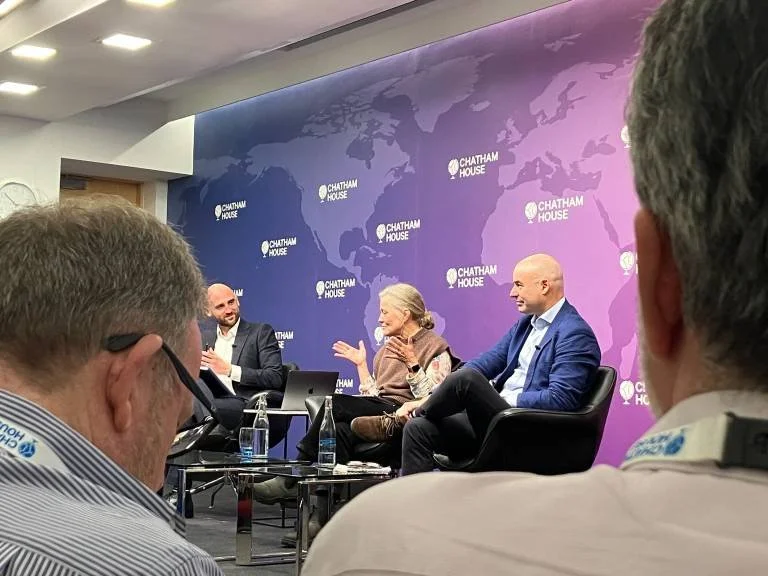
The first event, hosted by Chatham House, brought together experts on climate change and policymaking. An expert panel reflected on different approaches to tackling derailment risks. This was followed by an interactive taster session on the toolkit; facilitated by the UCL Climate Action Unit.
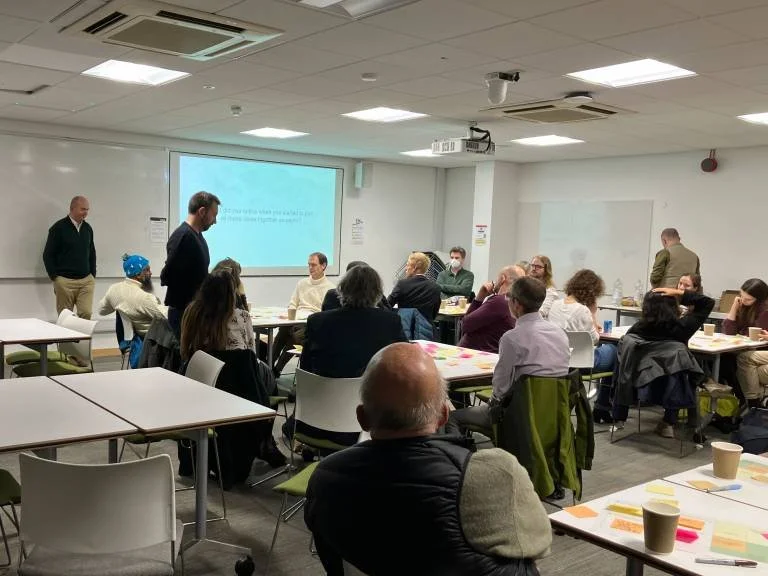
The second event, held at UCL, provided a group of research and policy professionals with a more in-depth experience of the training toolkit. At this workshop, the UCL Climate Action Unit helped participants to create a derailment risk loop tailored to their professional context, before sharing the opportunities that resulted from running this process with specific organisations.
Find out more
For more information on the Managing Derailment Risks project, visit https://www.scri.org.uk/derailment.
If you are keen to explore using the training toolkit to develop derailment risk readiness, visit https://www.scri.org.uk/derailment-toolkit or contact Daniel Jonusas, UCL Project Lead, at d.jonusas@ucl.ac.uk.
